ANALOGUE
AM and FM
You turn a dial to one frequency per station. Medium wave reaches far; FM sounds cleaner but runs out sooner.
See the bands doodleradio
Start
HOW RADIO WORKS
Most UK radio listening is now digital. A quarter still travels the old way.
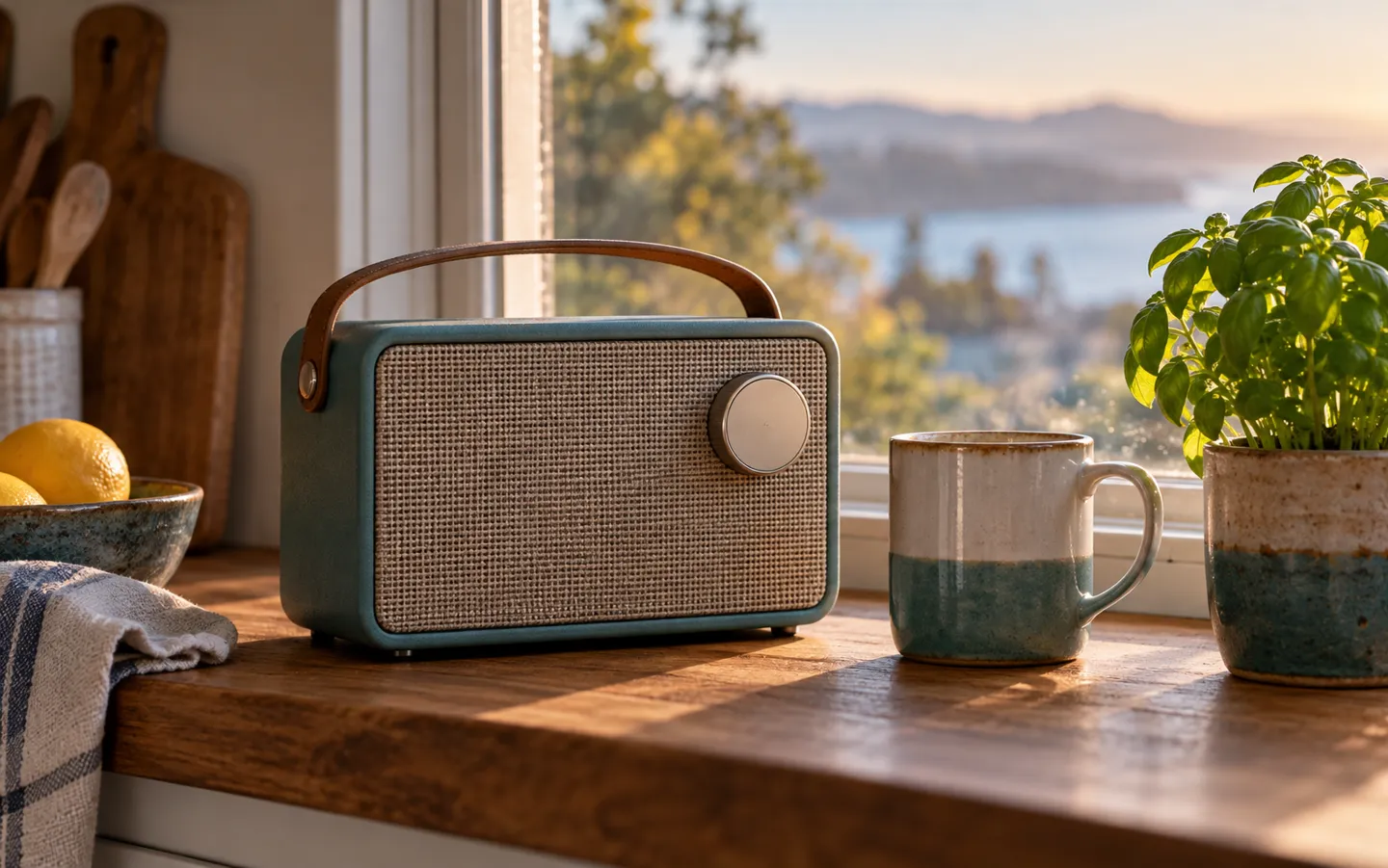
The voice in your kitchen may arrive on a medium-wave signal, an FM broadcast, a shared digital DAB stream or the internet. Each one travels differently, and each one explains why the reception does what it does. Here is how, in plain English.
Plain English, with the sources linked.
ON AIRsince 1901
Compare the ways to listenKeep in mind
THE SHORT ANSWER
Every station still starts as a signal.
What changes is how it travels to you.
ANALOGUE
You turn a dial to one frequency per station. Medium wave reaches far; FM sounds cleaner but runs out sooner.
See the bandsDIGITAL
Stations travel as data, shared on one signal or streamed online. Together they carry three in four listening hours.
Compare the waysTHE SKY ABOVE
Transmitters send the signal out; charged layers high above can bounce some of it back, mostly at night.
See the numbersHOW DO YOU LISTEN?
Pick the way you usually listen to see how the signal reaches you and what share of UK radio listening hours it carried in the second quarter of 2026, according to RAJAR.
RAJAR reports AM and FM as one figure, so both show 24.5%. Shares are of all radio listening hours; a small remainder came through digital television.
TWO NUMBERS WORTH KNOWING
Radio has not faded away.
It has changed the road it travels.
86.6%
UK adults who listened each week
About 51.1 million people aged 15 and over tuned in to radio each week, for an average of 20.3 hours per listener.
WEEKLY REACH · Q2 2026
75.5% vs 24.5%
Share of all listening hours
Three in four hours of radio listening came through a digital platform. The rest still arrived on AM and FM.
DIGITAL SHARE · Q2 2026
Both figures come from RAJAR, the industry body that measures UK radio audiences, for the second quarter of 2026.
BETTER RECEPTION
Step 1
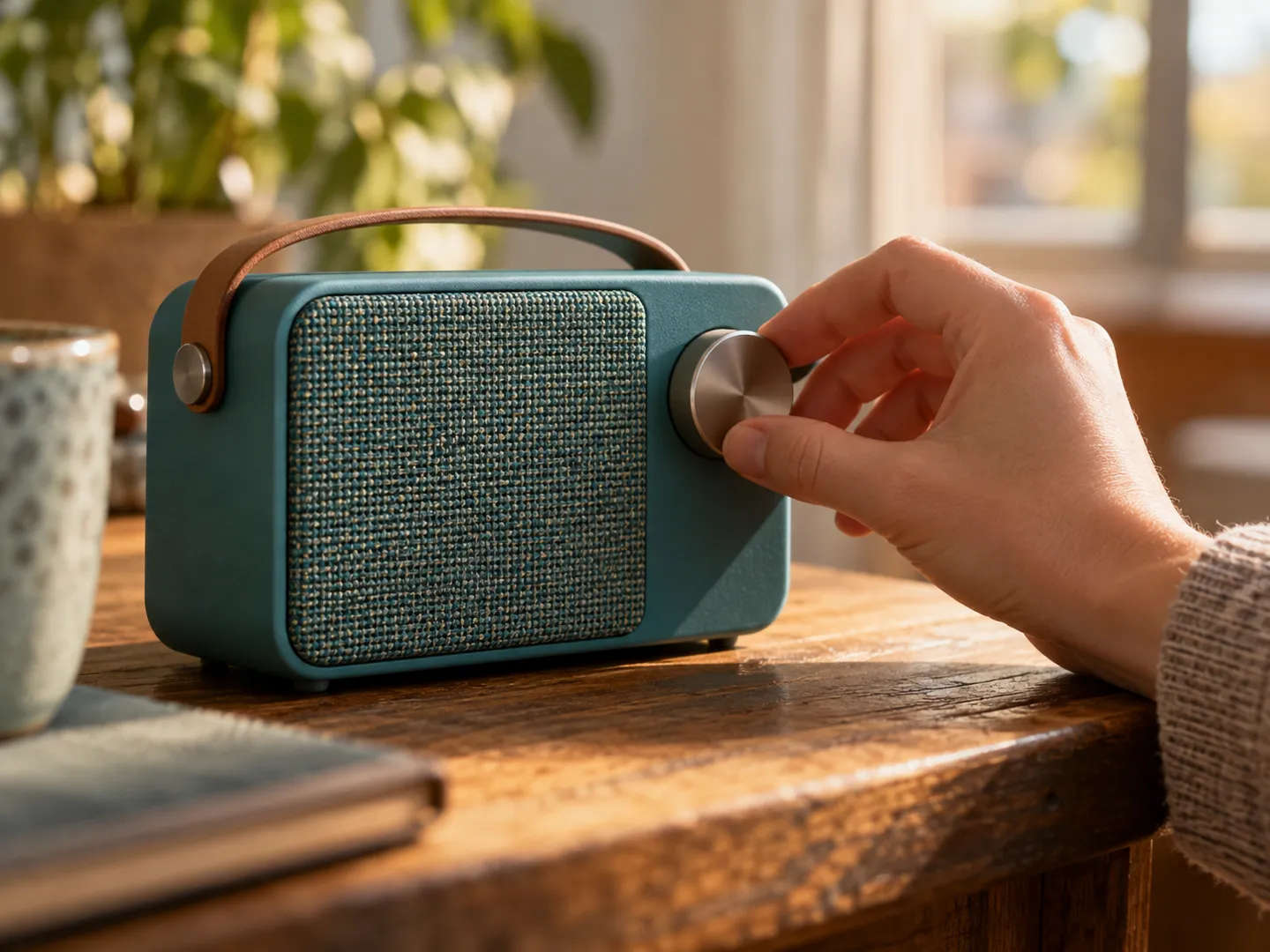
FM travels in fairly straight lines. A radio near a window, with its aerial fully pulled out, often hears more than one tucked behind a wall.
Step 2
If a DAB station goes missing after a move or a change of signal, run the radio’s station scan again so it finds what is on air now.
Step 3
Once the ionosphere’s lowest layer fades at night, distant AM stations can come through. Turn the dial slowly and listen.
Step 4
Many stations are on more than one platform. If reception is poor one way, the same station may come through on DAB, a smart speaker or an app.
RADIO FACTS
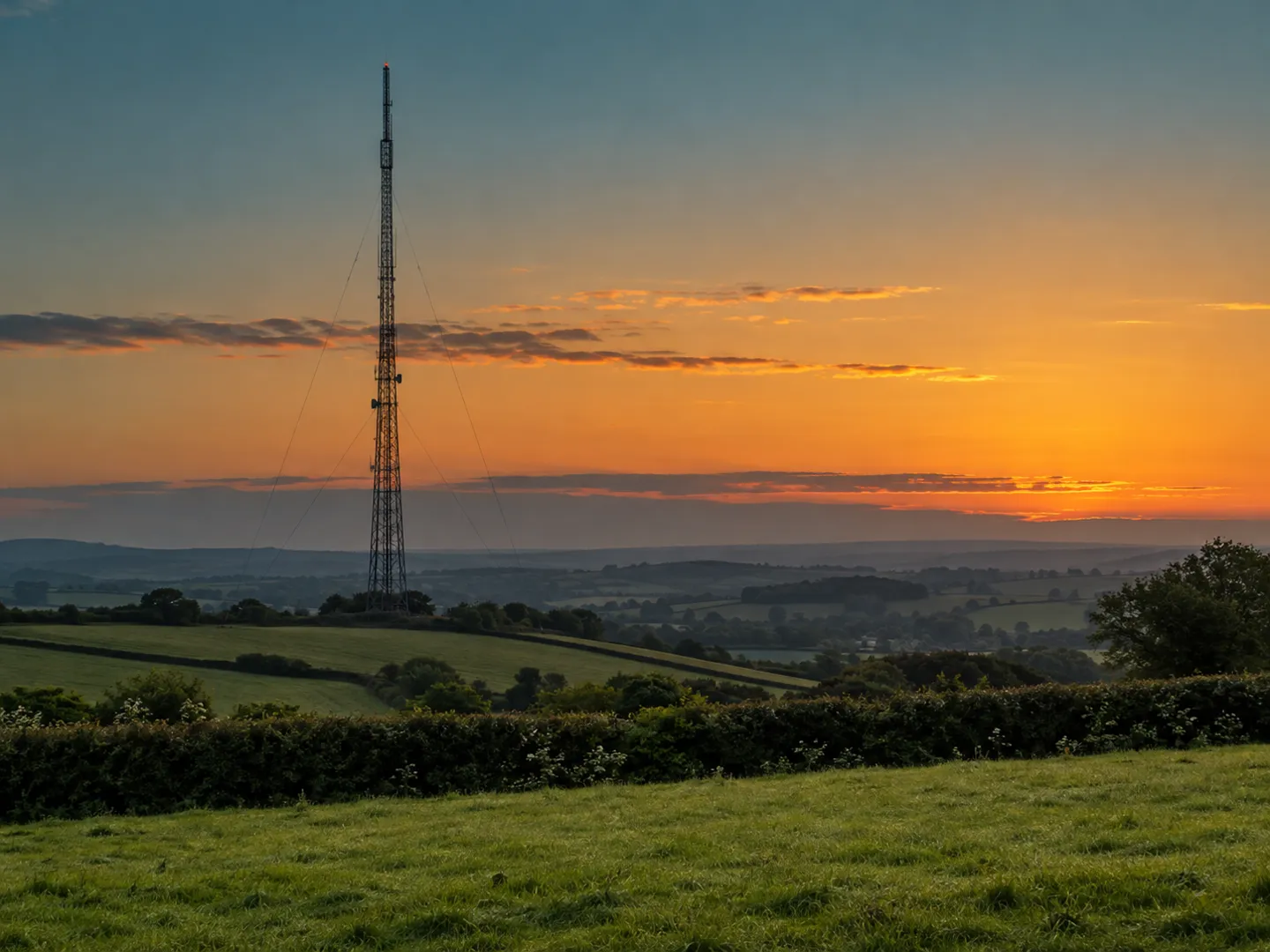
On 12 December 1901, the Morse code letter S was sent from Poldhu in Cornwall and picked up by Guglielmo Marconi at Signal Hill, Newfoundland, more than 2,000 miles away.
Ofcom’s technical code covers UK FM services between 87.5 and 108 MHz, and AM services on medium wave between 531 and 1602 kHz.
The ionosphere’s lowest layer, the D region about 60 to 90 km up, disappears over most nights. Some radio waves reflect off the charged layers above it.
Of the roughly 786 million hours spent on digital radio in an average week, DAB took 57%, smart speakers 25%, websites and apps 15% and digital TV 3%.
The BBC set 27 June 2026 to close its long-wave service on 198 kHz, which carried Radio 4 from Droitwich, Westerglen and Burghead.
QUICK QUESTIONS
Short answers to the questions people ask most.
They use different parts of the radio spectrum. In the UK, Ofcom’s technical code covers AM on medium wave between 531 and 1602 kHz, and FM between 87.5 and 108 MHz. FM usually sounds clearer; medium wave can travel further, especially after dark.
The lowest layer of the ionosphere, the D region about 60 to 90 km up, disappears over most nights. With it gone, medium-wave signals can reflect off the charged layers higher up and come back down far from the transmitter.
Plenty. In the second quarter of 2026, RAJAR found that 86.6% of UK adults, about 51.1 million people, listened to radio each week, for an average of 20.3 hours per listener.
It is taking the larger share. In the second quarter of 2026, 75.5% of UK radio listening hours were digital, against 24.5% on AM and FM. DAB alone took 57% of digital listening hours.
The BBC set 1am BST on 27 June 2026 to close its long-wave service on 198 kHz, which carried Radio 4. The transmitters at Droitwich, Westerglen and Burghead were to shut down on that day.
Destination
Updated
A NAME ON THE DIAL
doodleradio.com is part of the DoodleSale portfolio. It isn't in an auction right now, but you can ask about leasing it.